Voice AIRead Article
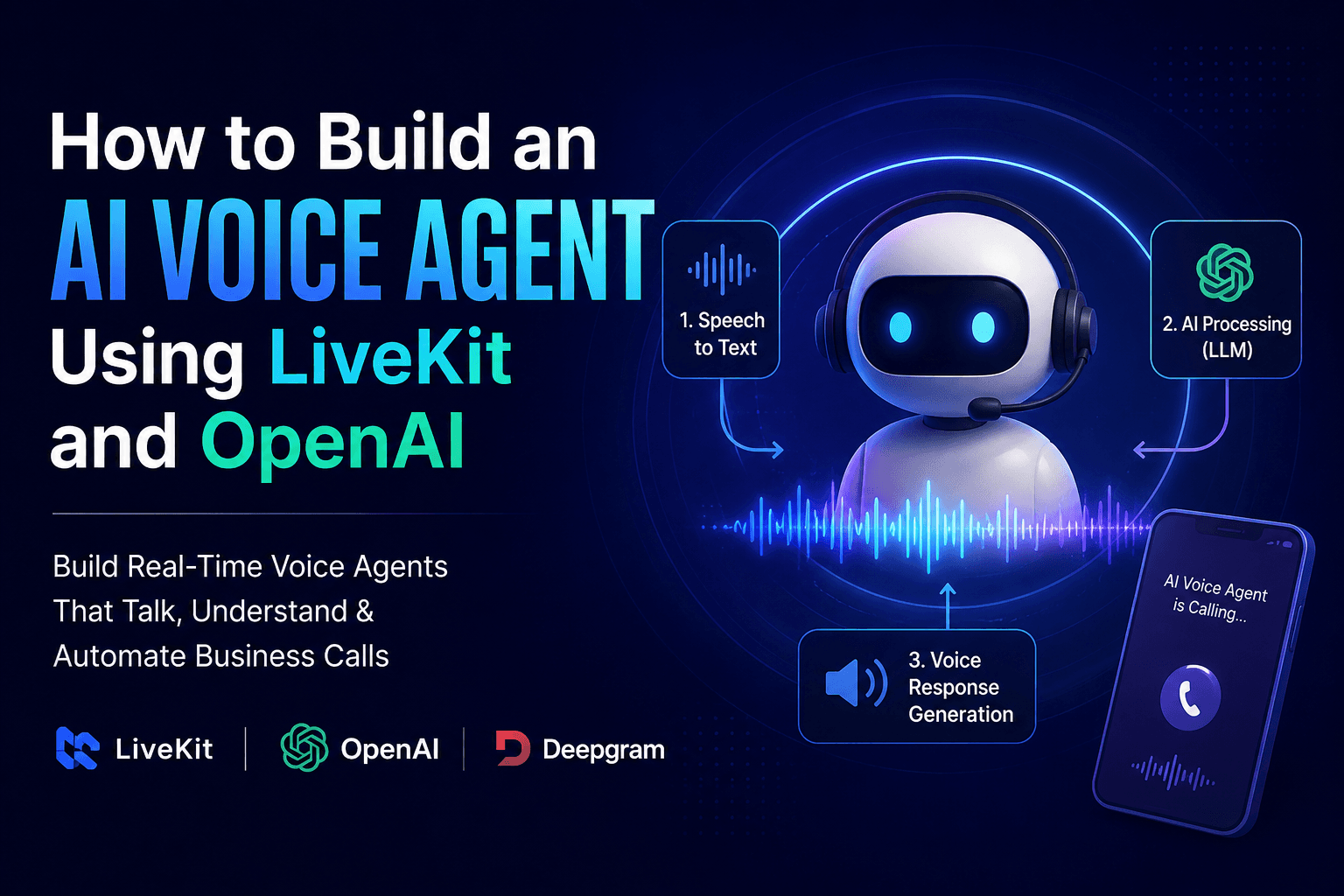
How to Build an AI Voice Agent Using LiveKit and OpenAI
Learn how AI voice agents automate business calls using modern AI tools.
July 2, 2026
8 min read
A senior engineer's field guide to deploying AI phone agents that take reservations, answer menu questions, and stop restaurants from losing money on missed calls.
Written by
Akash Maurya
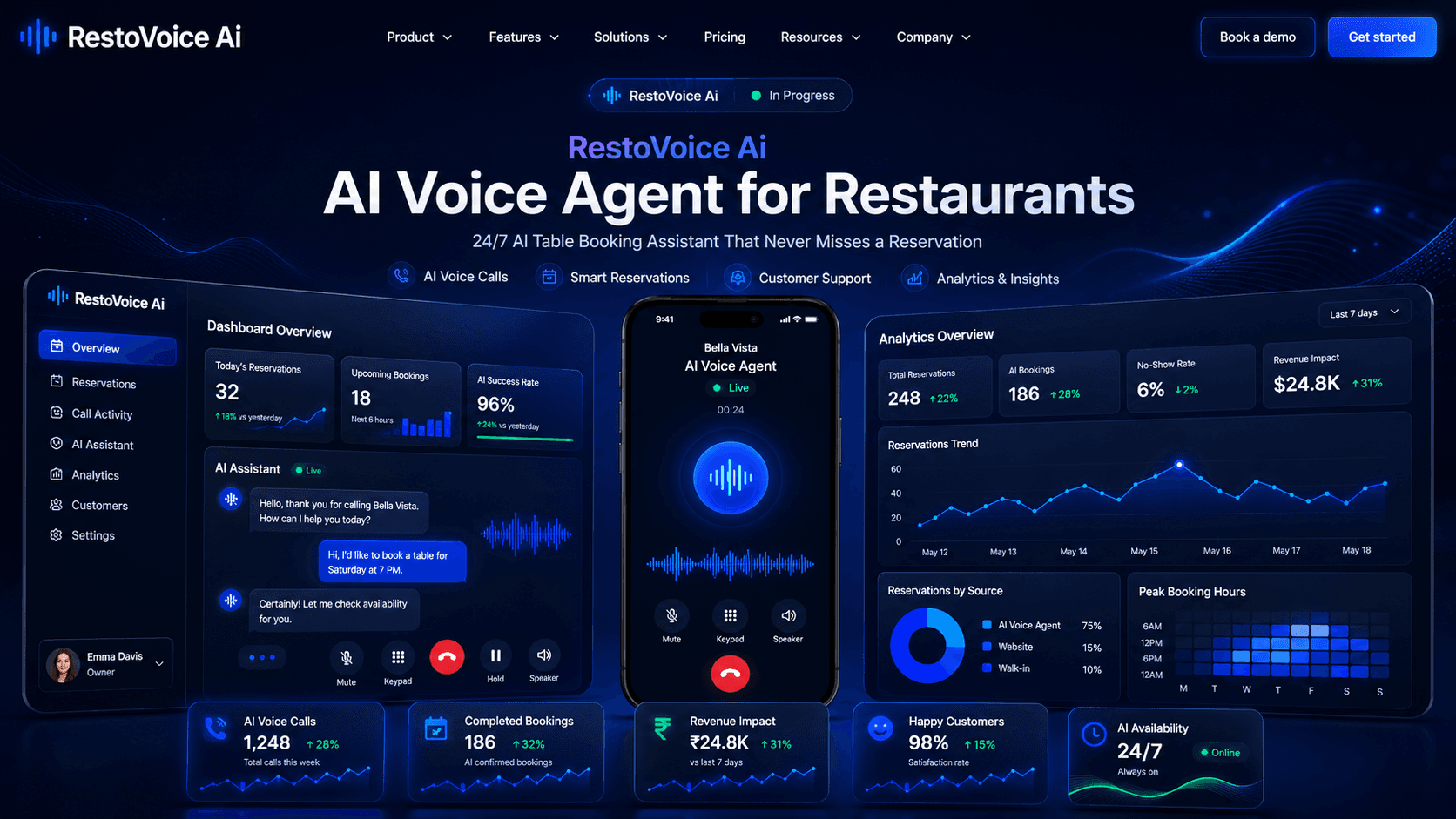
I've now shipped voice agents for a sushi chain, two QSR franchises, and a mid-size Indian restaurant group, and the pattern is always the same: the owner doesn't want a chatbot, they want the phone to stop being the bottleneck. This article is written from that vantage point — not a marketing overview, but the actual engineering and operational decisions that separate a voice agent guests tolerate from one they trust.
This guide walks through exactly what an AI voice agent for restaurants does, how to architect one that actually survives a Friday dinner rush, what it costs at real call volumes, and the mistakes I've watched restaurant groups make when they rush deployment without testing the failure paths.
Restaurant phone lines have a workload pattern that's brutal for staffing: near-zero volume for hours, then a wall of calls at 6:30pm that overlaps exactly with the busiest floor moment of the night. You cannot staff a dedicated host purely for the phone without adding a full labor line, and the person who's supposed to answer is usually also seating walk-ins, running the reservation book, or bussing a table because someone called out.
This isn't a technology problem restaurants created — it's a scheduling math problem. An AI voice agent doesn't get overwhelmed at 6:30pm; it can hold 20 simultaneous conversations as easily as one. That's the actual value proposition, not 'AI is cool.'
Not every call belongs to the AI, and pretending otherwise is the fastest way to produce a bad guest experience. Here's how the call types typically split in a well-designed deployment.
| Call Type | Handled By | Why |
|---|---|---|
| New reservation, standard party size | AI agent | Structured, rule-based, high volume |
| Hours, location, parking, menu items | AI agent | Static knowledge, answered instantly |
| Take-out order, standard menu | AI agent | Structured with POS integration |
| Large party (8+) or private event | Human (warm transfer) | Needs judgment on room layout, deposit terms |
| Allergy-critical custom order | Human (warm transfer) | Liability — AI should never guess on allergens |
| Complaint or refund request | Human (warm transfer) | Requires empathy and case-by-case judgment |
A production restaurant voice agent is a real-time pipeline, not a single API call. Calls arrive over PSTN through a telephony provider, get bridged into a WebRTC/SIP session, transcribed in real time, reasoned over by an LLM with restaurant-specific tools, and spoken back with low-latency TTS — all within a latency budget tight enough that the guest doesn't notice they're talking to software.
Twilio or Telnyx terminates the inbound PSTN call and forwards it via SIP trunk into your real-time media layer (LiveKit). This is also where you'd route existing numbers without asking the restaurant to change anything guests already dial.
LiveKit's Agents framework manages the live audio session, handles interruptions (a guest cutting the agent off mid-sentence needs to actually stop it from talking), and orchestrates the STT → LLM → TTS loop with sub-second round trips.
Deepgram Nova-3 or Flux transcribes the caller in real time. Flux is purpose-built for the turn-taking problem — knowing when a guest has actually finished talking versus paused mid-sentence — which matters enormously for call flow that doesn't feel robotic.
An LLM (GPT-4o-class or Claude) drives the conversation and calls structured tools: check_table_availability(), create_reservation(), lookup_menu_item(), transfer_to_human(). This is the layer that actually needs the most engineering attention — a restaurant agent with vague tool definitions will hallucinate table availability, which is worse than never deploying it at all.
TTS output goes back through LiveKit to the caller. For English-first restaurants, ElevenLabs or Deepgram Aura-2 work well; for Hindi, Hinglish, or other Indian-language callers, Sarvam AI's Bulbul model handles code-switching and Indian name pronunciation noticeably better than generic multilingual models.
Restaurant voice agent economics come down to minutes per month. A single-location, full-service restaurant typically logs 800-2,500 inbound call minutes a month depending on covers and take-out volume. Here's a realistic monthly cost model using a LiveKit + Deepgram + GPT-4o-mini + Sarvam/ElevenLabs stack versus an all-in-one platform like Vapi or Bland AI.
| Component | Self-built (LiveKit stack) | Managed platform (Vapi/Bland) |
|---|---|---|
| Telephony (Twilio, ~1,500 min) | $15–25 | included or ~$20 |
| STT (Deepgram Nova-3/Flux) | $7–12 | included |
| LLM (GPT-4o-mini tier) | $10–20 | included |
| TTS (Sarvam/ElevenLabs) | $15–40 | included |
| Platform/orchestration fee | LiveKit Ship plan: $50 | $0.05–0.12/min → $75–180 |
| Total (~1,500 min/month) | roughly $100–150/month | roughly $95–220/month |
Pro Tip
Below about 2,000 minutes/month, a managed platform (Vapi, Bland, Retell) is usually faster to launch and cheaper in engineering hours than a self-built LiveKit stack. Past 10,000-15,000 minutes/month across a multi-location group, the self-built route starts winning on unit economics and gives you control over the exact tool-calling logic your ops team needs.
Most modern voice agents disclose this upfront ('Hi, this is the AI assistant for...') both for guest trust and increasingly for legal compliance in several US states. Disclosure doesn't hurt booking rates when the agent is fast and accurate.
Yes, if you use a model built for code-switching such as Sarvam AI's Bulbul for TTS paired with a multilingual STT model — this is a common failure point for restaurants using English-only stacks.
A well-built agent reads back the order before confirming and gives the caller a chance to correct it — the same pattern a good host would use.
No — it replaces the phone-answering burden that currently falls on the host, freeing them to actually seat and manage the floor.
A single-location deployment on a managed platform typically takes 1-2 weeks including menu ingestion and testing. A custom LiveKit build for a multi-location group runs 4-8 weeks.
A single-location restaurant with two phone lines misses roughly 30-40% of incoming calls during peak hours because staff are seating guests, running food, or already on another call. Each missed call is a lost reservation, a lost take-out order, or a guest who calls the restaurant next door instead. For a restaurant doing $40-60 in average order value, missing even 15 calls a week during dinner rush is real, measurable revenue walking away — and it's invisible on any P&L line item because you can't report on a call that was never answered.
An AI voice agent answers every call on the first ring, in whatever language the caller uses, handles reservations and simple take-out orders directly, answers menu and hours questions from a live knowledge base, and only escalates to a human for edge cases like large parties, allergy-sensitive custom orders, or an irate guest. The agent integrates with the restaurant's existing reservation system (OpenTable, Resy, or a custom booking table) and POS, so a booked table or placed order shows up exactly where staff already look for it.
Written by Akash Maurya.
Published on July 15, 2026 • Updated on July 15, 2026
Learn how AI voice agents automate business calls using modern AI tools.
A practical look at how AI receptionists work, where they genuinely outperform humans, where they don't, and how to deploy one without breaking the guest or customer experience.
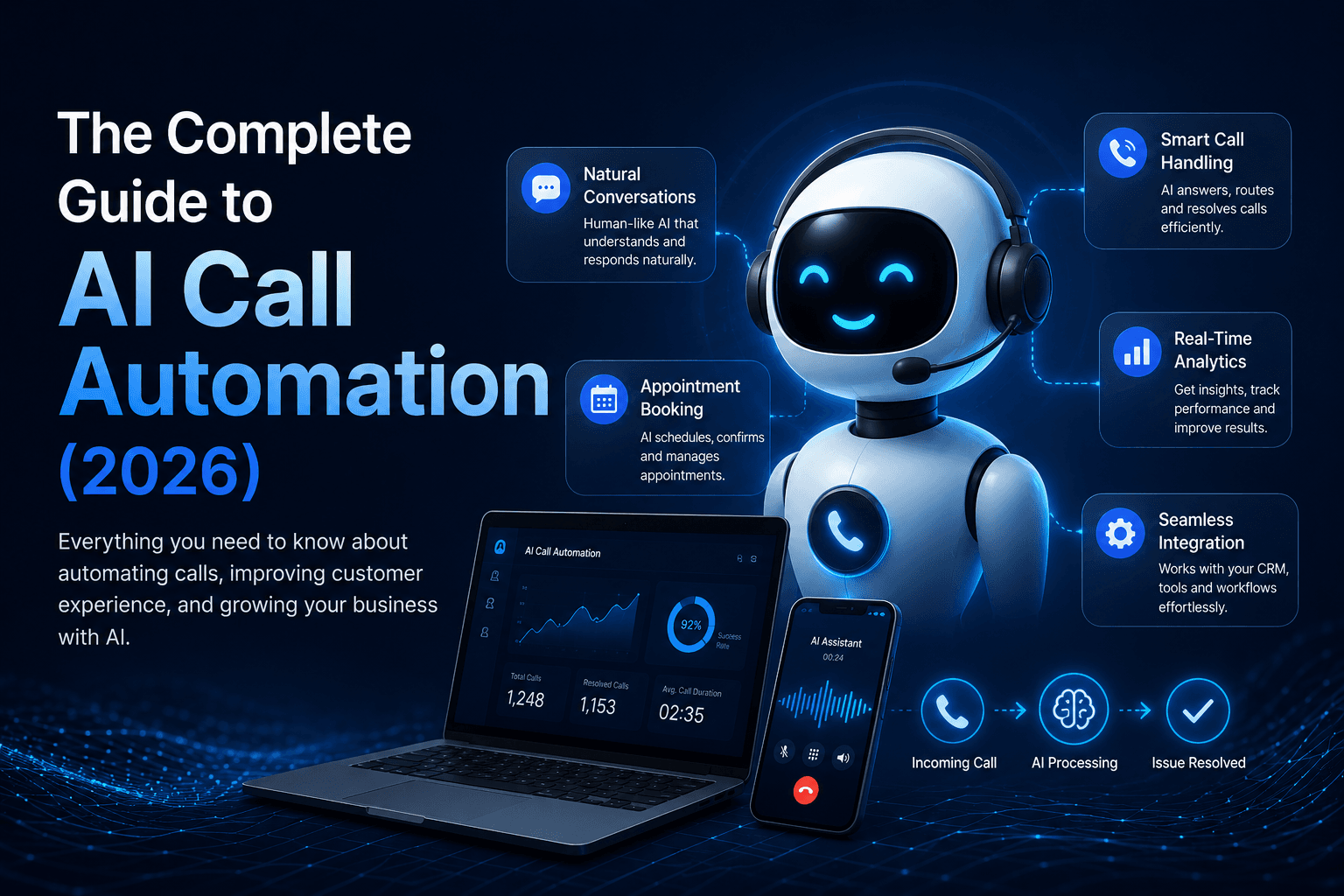
Everything a business needs to know before automating inbound or outbound calls with AI — architecture, platform choices, cost modeling, compliance, and what actually breaks in production.
I build modern AI Voice Agents, SaaS platforms, automation systems, and full-stack applications that help businesses automate operations and improve customer experiences.