AI Voice Agents are transforming customer communication by enabling businesses to answer phone calls automatically using artificial intelligence. Unlike traditional IVR systems, modern voice agents understand natural language, respond intelligently, and complete real business tasks such as appointment booking, customer support, and lead qualification. This guide explains how these systems work, the technologies behind them, and how businesses can successfully implement voice AI solutions.
In this comprehensive guide, you'll learn how AI Voice Agents operate, the architecture behind real-time voice conversations, the technologies required to build production-ready systems, common business use cases, implementation strategies, and best practices for deploying scalable voice AI applications.
Introduction
Customer communication is one of the most important aspects of every business. Whether you operate a healthcare clinic, restaurant, law firm, real estate agency, or SaaS company, every missed phone call represents a missed opportunity. Modern customers expect instant responses, but hiring large customer support teams is expensive and difficult to scale. AI Voice Agents solve this challenge by combining speech recognition, large language models, and natural voice synthesis to provide real-time conversations that feel remarkably human.
Instead of placing customers on hold or sending them through confusing IVR menus, businesses can deploy AI-powered voice assistants that answer calls immediately, understand natural language, respond intelligently, and even complete business tasks such as appointment booking, order tracking, lead qualification, or customer support. This guide explains how AI Voice Agents work and how you can build one using modern technologies such as LiveKit, OpenAI, Node.js, and Deepgram.
What is AI Voice Agent Development?
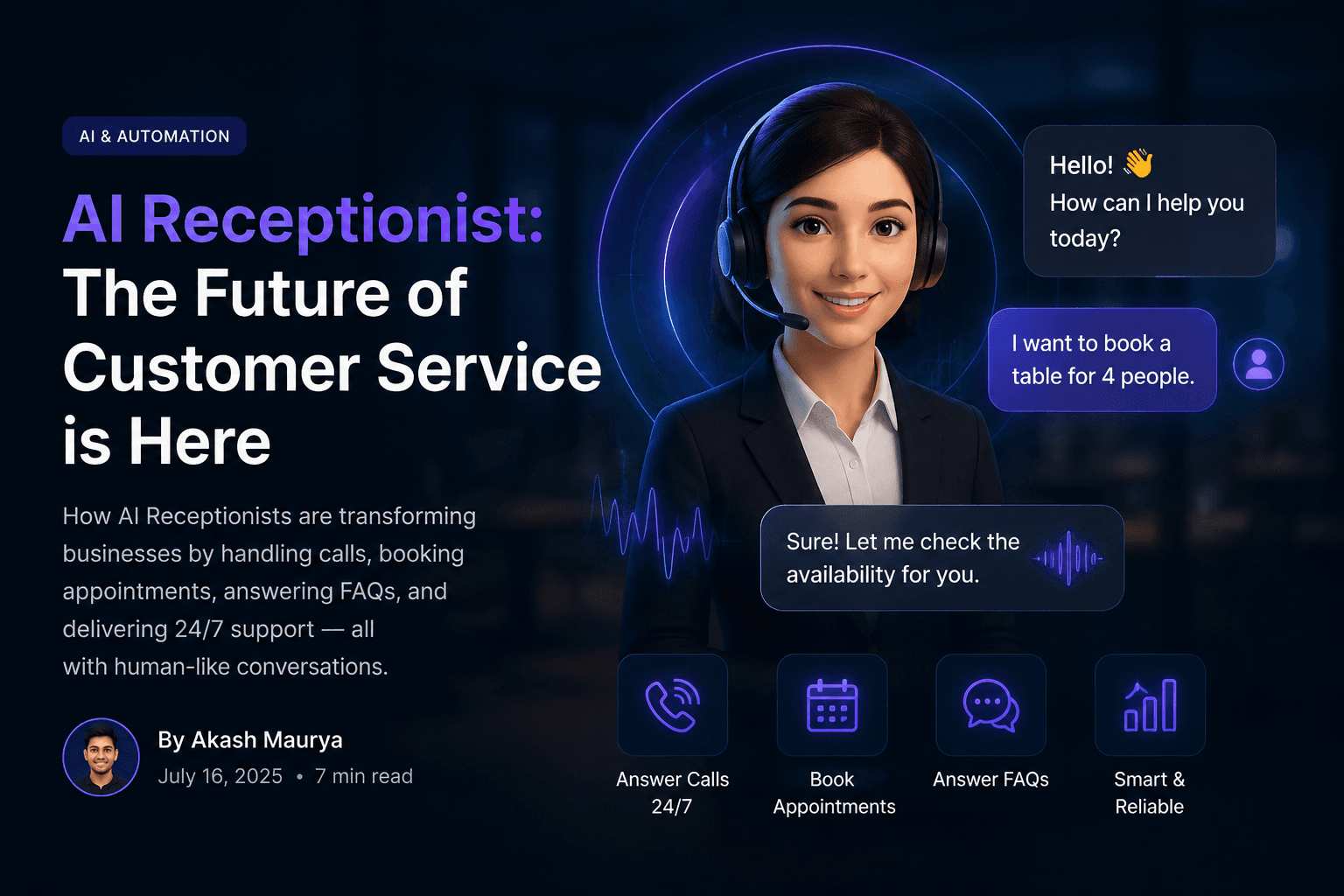
An AI Voice Agent is an intelligent software application capable of understanding spoken language, reasoning about user intent, and responding naturally using synthesized speech. Unlike traditional IVR systems that rely on button presses and predefined flows, AI Voice Agents can understand free-form conversations and adapt responses based on context.
Building one means wiring together several distinct AI services — speech recognition, a language model for reasoning, and speech synthesis — into a single low-latency pipeline that can hold a natural, real-time conversation without the caller noticing the seams between each component.
How AI Voice Agents Work
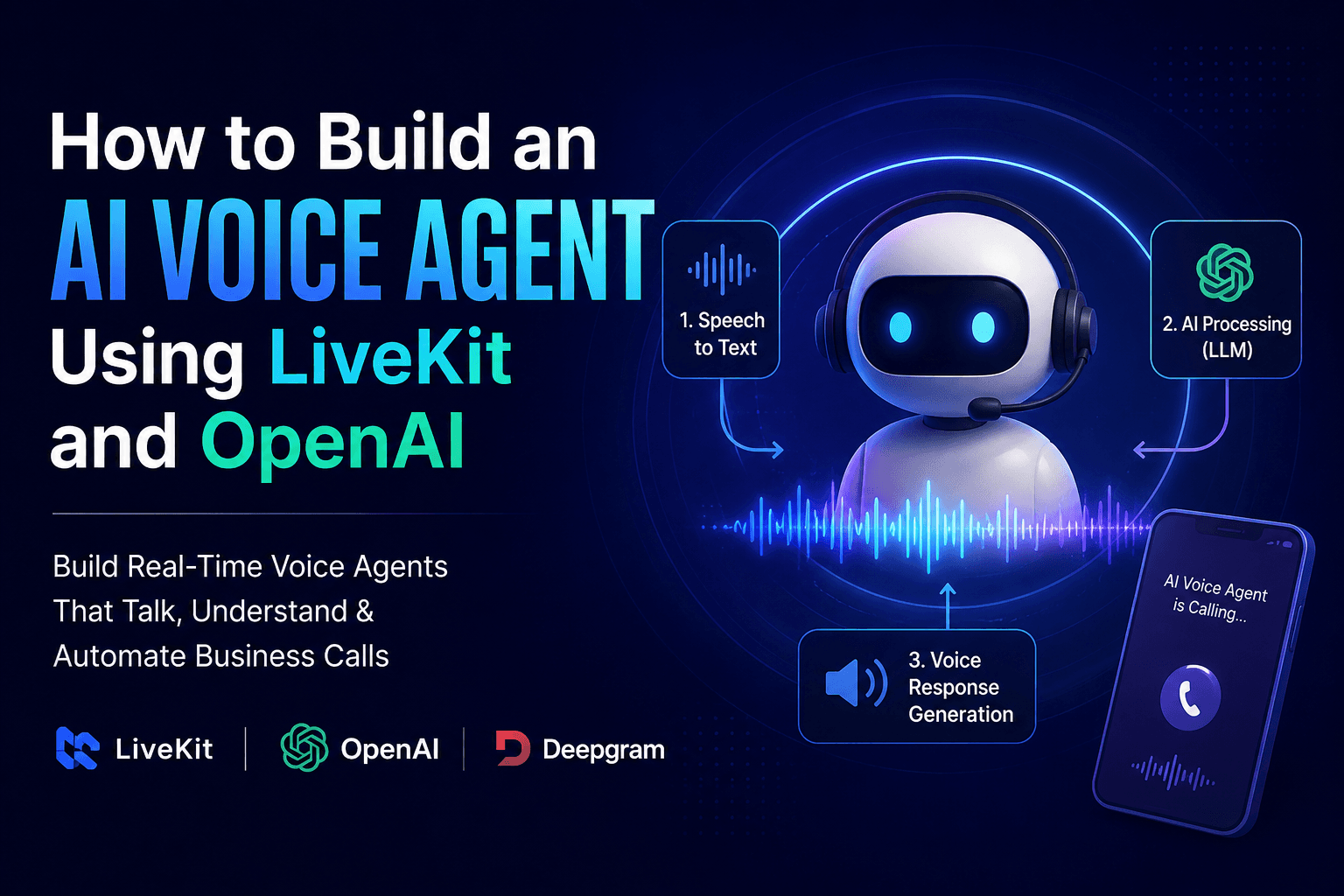
Every AI Voice Agent consists of several connected technologies working together in real time. The user's speech is converted into text, processed by an AI model, transformed into an intelligent response, and finally converted back into natural speech.
1. Speech-to-Text
Speech recognition converts spoken audio into text. Services such as Deepgram provide highly accurate transcription with low latency, making conversations feel natural.
2. Large Language Model
After transcription, the conversation is sent to an LLM such as OpenAI. The model understands intent, maintains conversation context, and generates intelligent responses based on business rules.
3. AI Processing
Once the transcribed text and conversation history are received, the AI engine analyzes and processes them using models optimized for accuracy and speed.
The system identifies key patterns in the request and applies reasoning to generate a response tailored to the caller's intent and the business rules configured for that use case.
All processing happens in real time with optimized performance pipelines to ensure fast and reliable results, even under high call load.
Ongoing refinement of prompts, tool definitions, and fallback logic improves precision, reduces errors, and produces smarter responses with every interaction.
4. Text-to-Speech
The generated response is converted back into realistic speech using modern TTS engines. The result is a voice conversation that sounds natural and engaging.
5. Live Communication Layer
Platforms like LiveKit manage real-time audio streaming, allowing seamless conversations with minimal delay.
Business Benefits
- Reduce operational costs
- Improve customer satisfaction
- Answer every call instantly
- Operate 24/7
- Scale to thousands of conversations
- Increase lead conversion rates
- Automate repetitive workflows
Real-World Use Cases
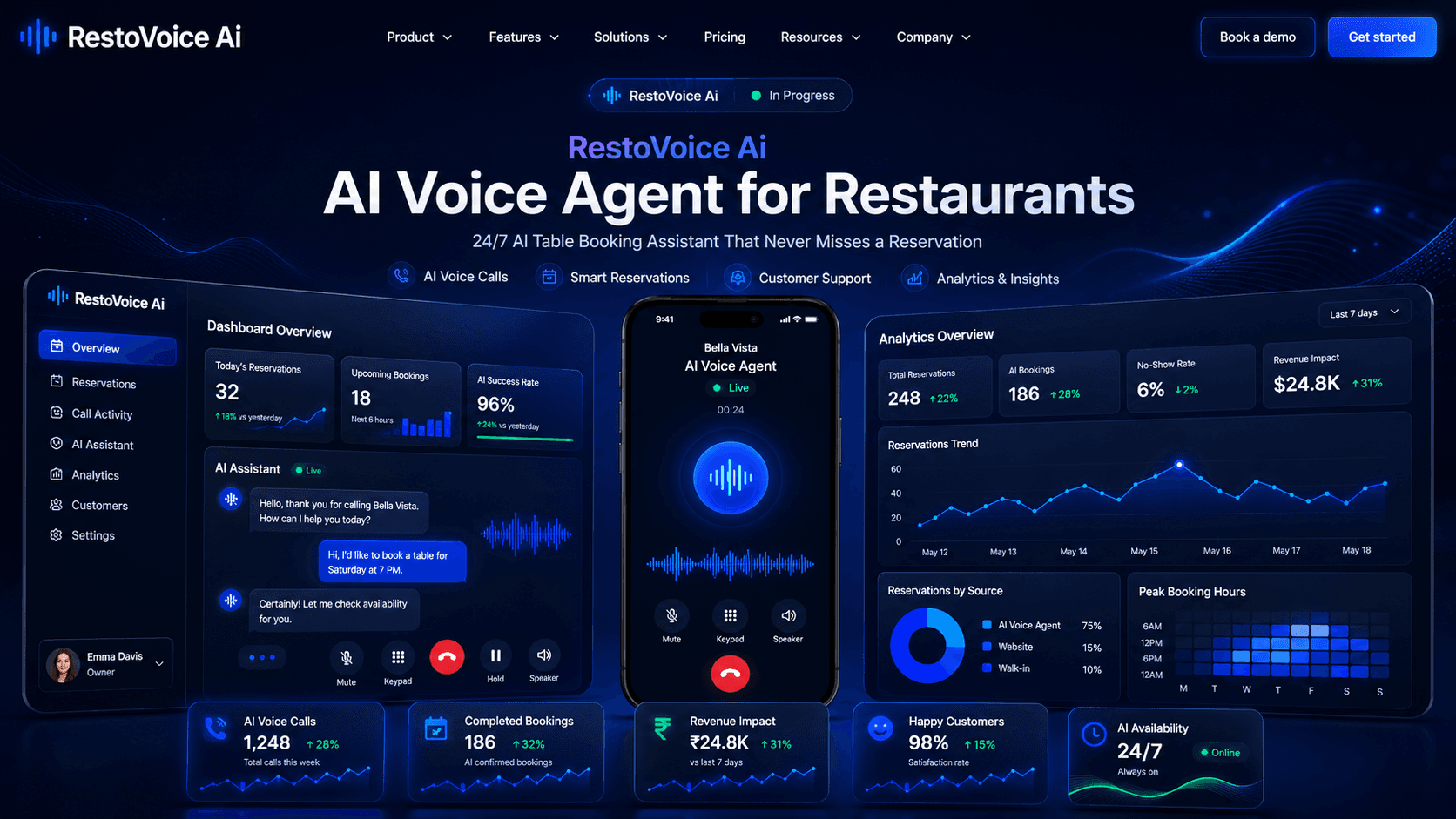
AI Voice Agents are already transforming industries including healthcare, restaurants, legal services, real estate, education, finance, and SaaS. Healthcare providers automate appointment scheduling, restaurants manage reservations, and SaaS companies use AI agents for onboarding and customer support.
Technology Stack
A production-ready AI Voice Agent commonly uses Next.js for the frontend dashboard, Node.js for backend APIs, LiveKit for audio streaming, OpenAI for reasoning, Deepgram for speech recognition, and cloud platforms for deployment and scaling.
Final Thoughts
AI Voice Agents are rapidly becoming a competitive advantage for businesses that rely on phone communication. Companies adopting voice AI today are reducing support costs, improving customer experience, and increasing operational efficiency. As speech models continue to improve, AI Voice Agents will become a standard part of customer service infrastructure across nearly every industry.
Problem
Many businesses lose valuable customers because phone calls go unanswered during busy hours, outside business hours, or due to limited support staff. Traditional call centers are expensive to operate, difficult to scale, and often result in long wait times that frustrate customers. These challenges reduce customer satisfaction, increase operational costs, and negatively impact revenue.
Solution
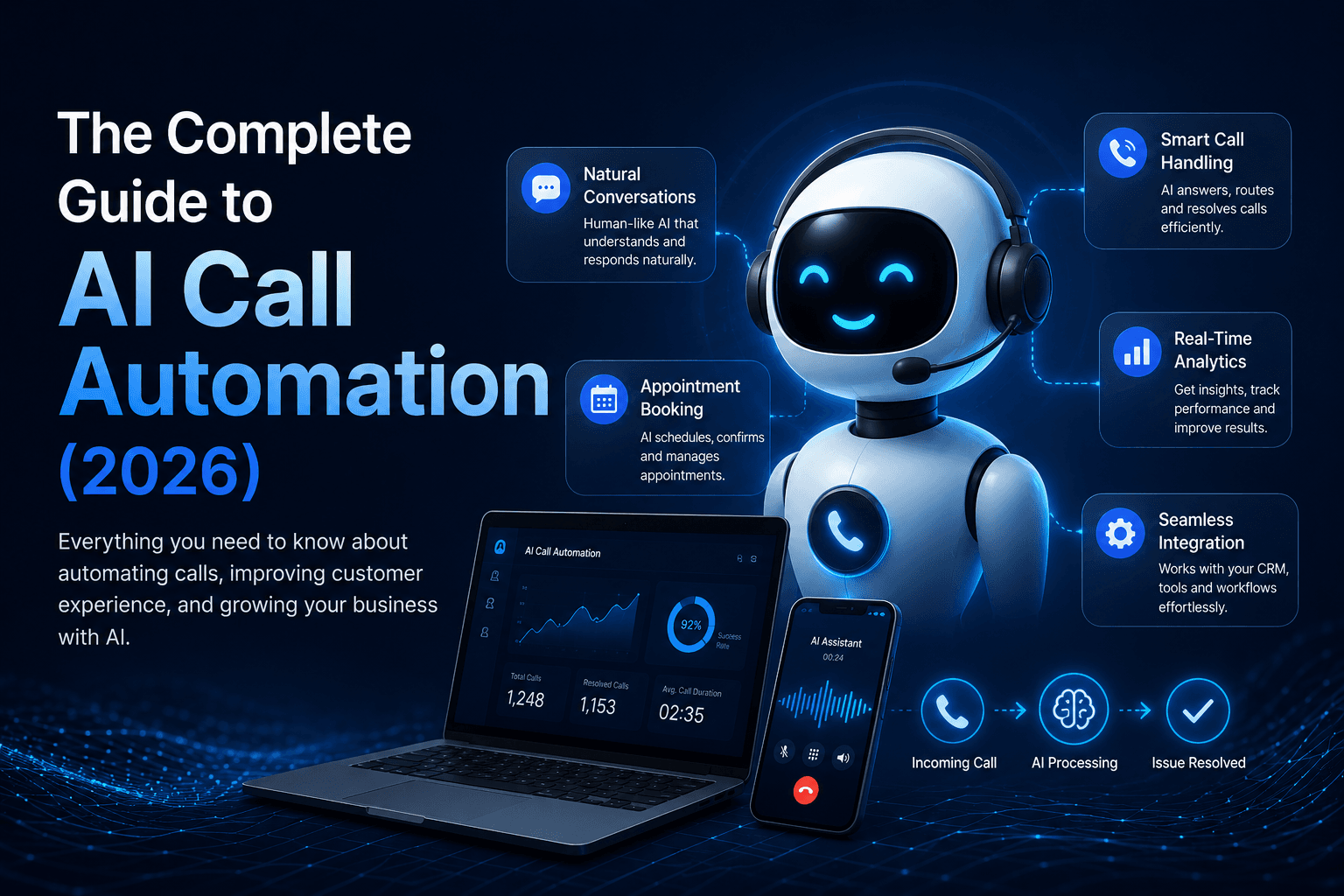
AI Voice Agents solve these challenges by combining speech recognition, large language models, and natural speech synthesis into a single conversational system. They can answer calls instantly, understand customer intent, provide accurate responses, perform business actions such as scheduling appointments or qualifying leads, and seamlessly transfer conversations to human agents when needed.
Key Features
- Real-time voice conversation
- Speech recognition
- AI response generation
- Text-to-speech output
Results
- Reduced support cost
- Faster response time
- 24/7 availability
Technologies Used
Next.jsNode.jsOpenAILiveKitDeepgram
Tags
#AI#Voice Agent#Automation#OpenAI
About the Author
Written by Akash Maurya.
Published on July 2, 2026 • Updated on July 06, 2026