Voice AIRead Article
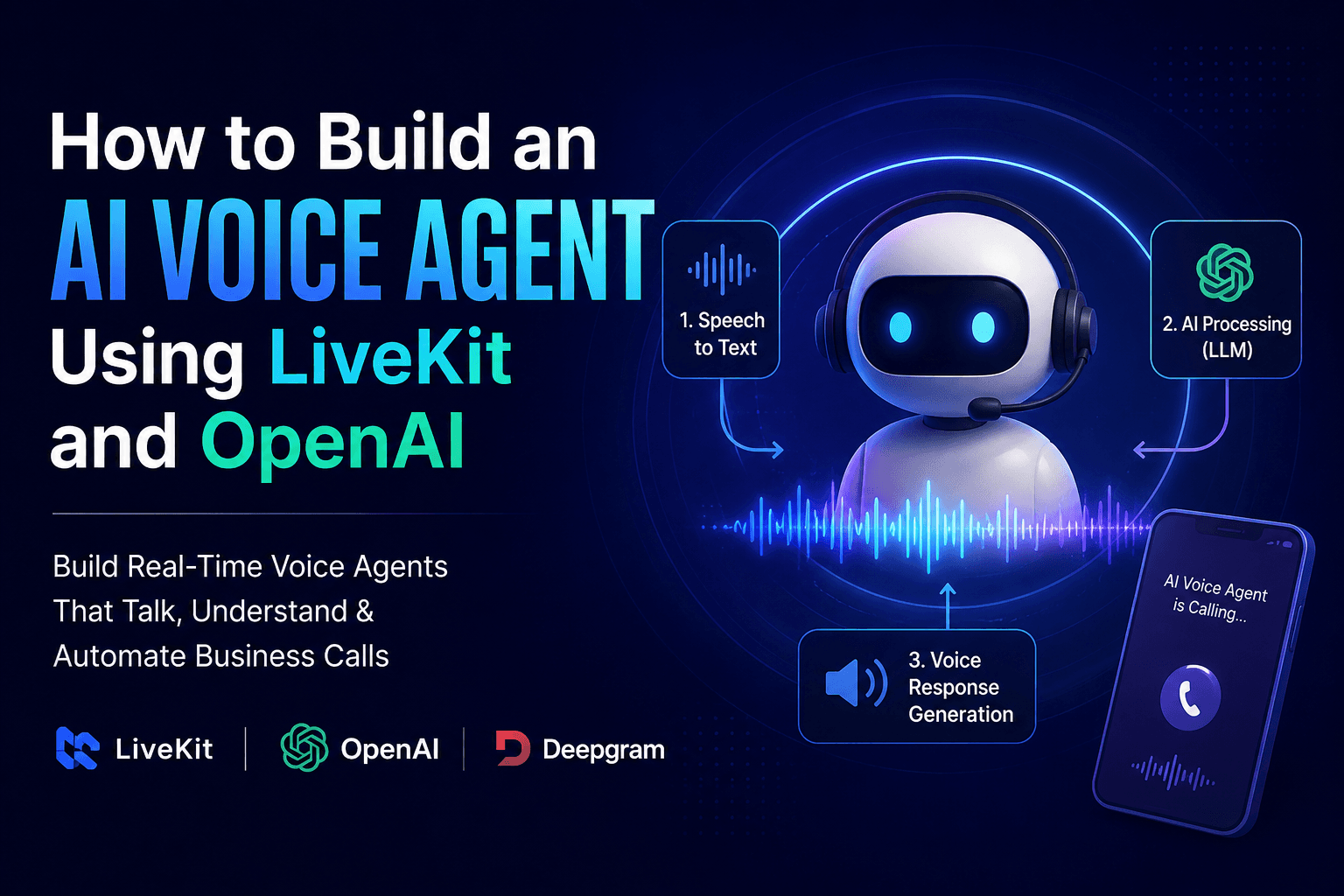
How to Build an AI Voice Agent Using LiveKit and OpenAI
Learn how AI voice agents automate business calls using modern AI tools.
July 2, 2026
8 min read
An honest, numbers-based comparison of the four platforms teams actually choose between when building AI voice agents in 2026.
Written by
Akash Maurya
I get asked 'which platform should we use' on nearly every voice AI project, and the honest answer is always 'it depends on your volume and how much engineering time you have,' which is unsatisfying but true. This article gives you the actual decision framework instead of a generic feature table, because these four tools aren't really competing for the same buyer.
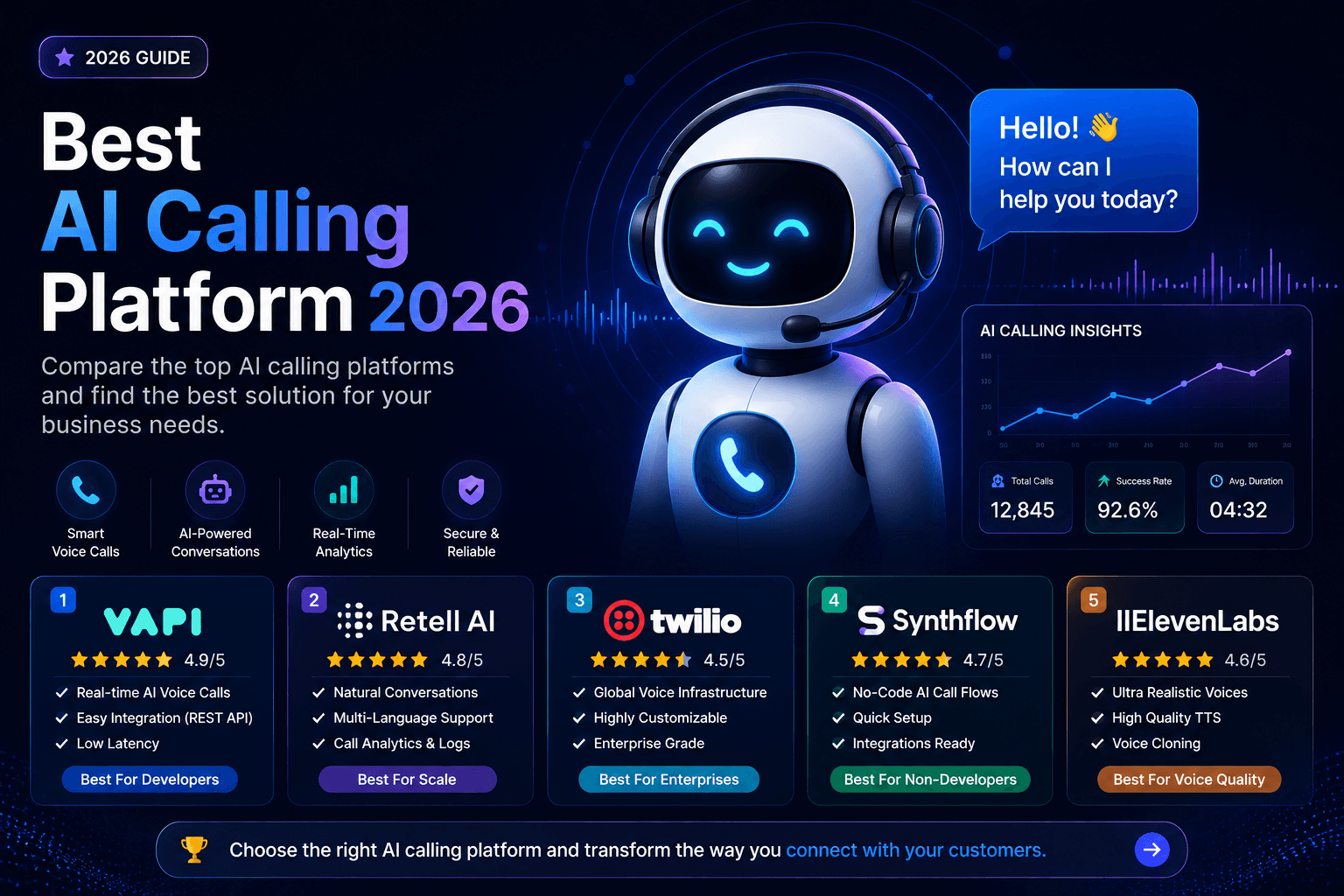
This comparison scores Twilio, LiveKit, Vapi, and Bland AI on the dimensions that actually decide production outcomes — real per-minute cost, control over the AI stack, time to launch, and compliance readiness — instead of just comparing marketing pages.
These four tools aren't apples-to-apples. Twilio is telephony infrastructure — it gets a phone call from the PSTN into your application; it doesn't provide AI on its own. LiveKit is an open-source real-time media server plus an Agents framework for building voice AI — it sits at a similar layer to 'build your own' but with far less plumbing to write. Vapi and Bland AI are managed, opinionated platforms that bundle telephony, STT, LLM orchestration, and TTS behind a single API, trading flexibility for speed.
| Platform | What It Is | Best For |
|---|---|---|
| Twilio | Telephony + Media Streams API | Teams building fully custom AI on top of proven telephony |
| LiveKit | Open-source real-time media server + Agents framework | Teams wanting full control with less plumbing than raw WebRTC |
| Vapi | Managed, bring-your-own-key voice AI orchestration | Fast prototyping with flexibility to swap components |
| Bland AI | Managed, all-inclusive outbound-focused voice AI | High-volume outbound campaigns needing predictable pricing |
Headline per-minute numbers are almost never the full story. Vapi advertises $0.05/min, but that's the orchestration fee only — add your own STT, LLM, and TTS, and the real all-in cost typically lands between $0.13 and $0.30/min. Bland AI bundles more into its rate, landing around $0.09-0.15/min all-inclusive for enterprise plans. LiveKit charges $0.01/min for agent sessions plus WebRTC/SIP minutes and separate inference costs, plus a monthly plan floor ($0/$50/$500). Twilio alone is just telephony (~$0.0085-0.014/min in the US) — you still need to build or buy the AI layer on top.
| Volume/Month | Twilio + custom build | LiveKit (full stack) | Vapi (BYOK, mid config) | Bland AI (all-in) |
|---|---|---|---|---|
| 1,000 minutes | $50–120 + eng time | $100–180 | $130–250 | $90–150 |
| 10,000 minutes | $300–700 + eng time | $600–1,100 | $1,300–2,500 | $900–1,500 |
| 50,000 minutes | $1,200–2,800 + eng time | $2,500–4,500 | $6,500–12,500 | $4,500–7,500 |
Pro Tip
At low volume, engineering time dominates the real cost equation — a managed platform (Vapi or Bland) usually wins even at a higher per-minute rate because you launch in days, not weeks. Past ~15,000-20,000 minutes/month, the math flips toward LiveKit or a fully custom Twilio build.
| Platform | HIPAA | SOC 2 | Self-Hosting Option |
|---|---|---|---|
| Twilio | Yes (BAA available) | Yes | N/A (managed telephony) |
| LiveKit | Yes (Scale tier and Enterprise) | Yes | Yes — fully open source |
| Vapi | Yes on enterprise plans | Yes | No |
| Bland AI | Limited — verify current posture directly | Varies by plan | No |
In real deployments, LiveKit and Vapi both consistently achieve sub-second round-trip latency when paired with streaming STT/TTS models (Deepgram Flux, Cartesia, ElevenLabs Flash). Bland AI's bundled stack is optimized and reliable for outbound calling but offers less tuning headroom. A raw Twilio Media Streams build can match or beat all of them on latency — but only if your team correctly implements streaming at every layer, which is nontrivial engineering work.
At low volume, none of them are dramatically cheaper than the others once engineering time is priced in — the differences matter more at scale. Bland AI tends to win on predictable all-in pricing; LiveKit tends to win on unit economics at high volume.
Migrating from Vapi or Bland to a LiveKit or Twilio build is mostly a rebuild of the orchestration layer — budget 6-10 weeks of engineering time for a non-trivial production system.
Voice quality is actually a function of the TTS provider you choose (ElevenLabs, Cartesia, Sarvam AI), not the orchestration platform itself — all four platforms can integrate premium TTS providers.
Every AI voice calling platform's homepage claims to be the fastest, cheapest, and most flexible. In practice, headline per-minute rates rarely reflect what you'll actually pay once telephony, STT, LLM, and TTS costs stack up — and picking the wrong platform for your team's engineering capacity or call volume leads to expensive migrations 3-6 months in.
Understanding what each platform actually is — Twilio is telephony infrastructure, LiveKit is a real-time media and agent framework, Vapi and Bland AI are managed voice-agent orchestration platforms — lets you match the right tool to your volume, timeline, and engineering capacity instead of chasing the lowest advertised per-minute number.
Written by Akash Maurya.
Published on July 15, 2026 • Updated on July 15, 2026
Learn how AI voice agents automate business calls using modern AI tools.
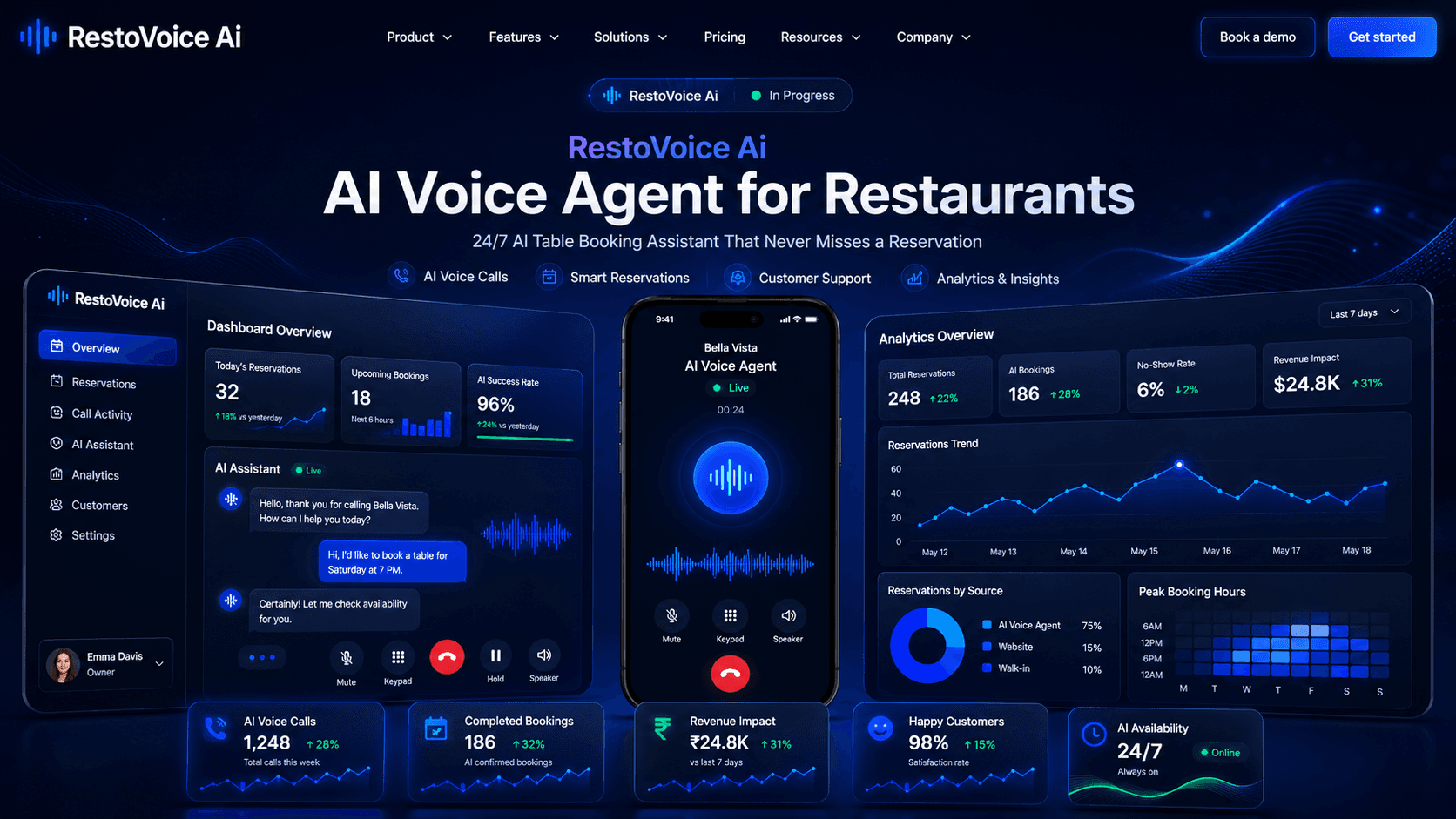
A senior engineer's field guide to deploying AI phone agents that take reservations, answer menu questions, and stop restaurants from losing money on missed calls.
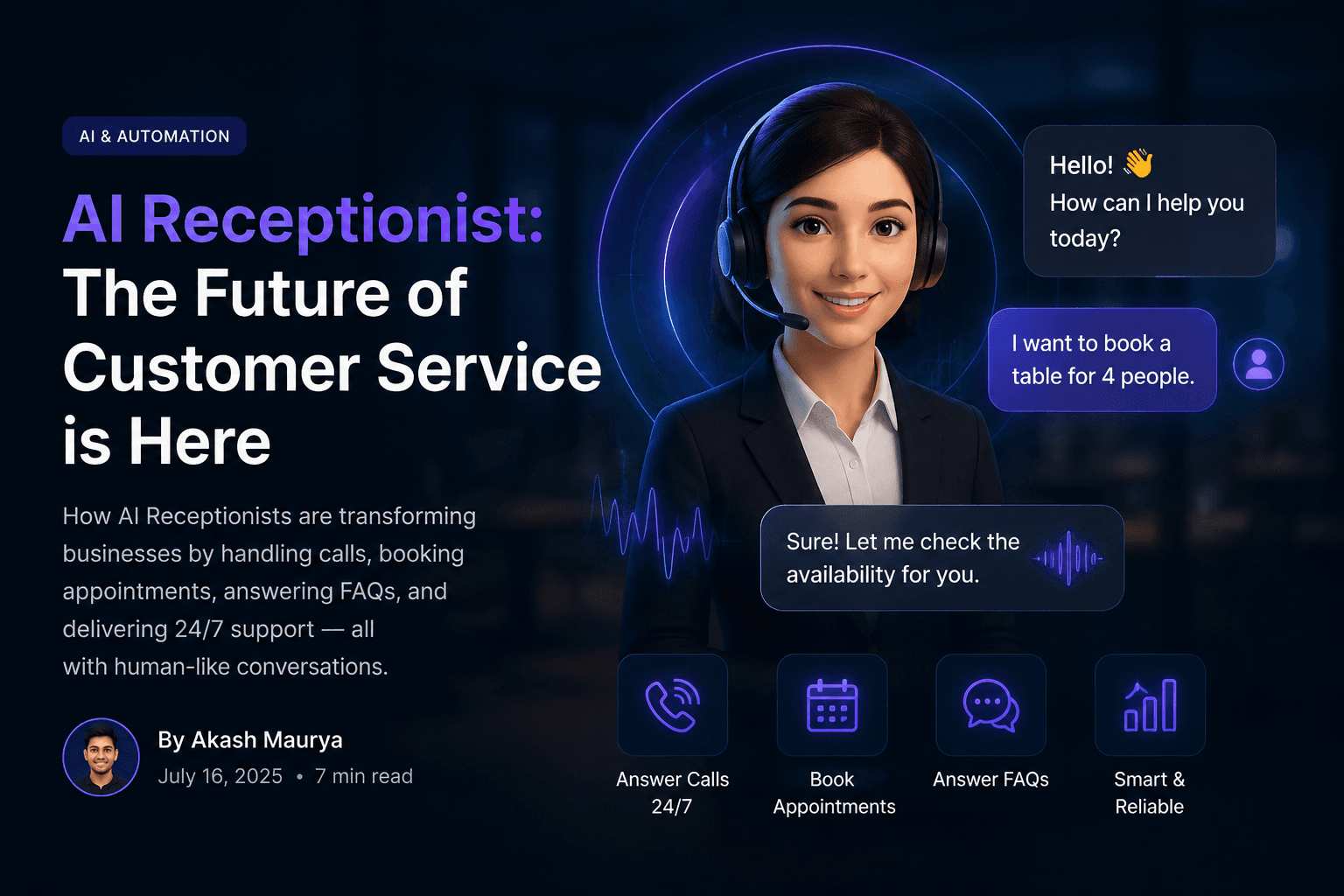
A practical look at how AI receptionists work, where they genuinely outperform humans, where they don't, and how to deploy one without breaking the guest or customer experience.
I build modern AI Voice Agents, SaaS platforms, automation systems, and full-stack applications that help businesses automate operations and improve customer experiences.